Showing posts with label research. Show all posts

Friday, March 7, 2014

Part 3: Here's the positive way of dealing with New Genealogists


I decided to move this column up a bit to explain the end of the series before the weekend, based on the amount of comments I received on Google+.


So what happened to David? Well, I decided to write a forum with my frustrations and see if someone else could see something that I could not. 


Name: David Ingerson 
Marriage to Almira Drake 1821 Evans Mills, Jefferson Co, New York, United States 
Kid 1 Eneas Ingerson, b. 1832 NY 
Census 1850 Gouverneur, Saint Lawrence, New York, United States 
Marriage to Elizabeth Graves 1852 
Mary J Ingerson, b. 1852 NY
Jay Eugene Ingerson, b. 1857 NY 
Census 1860 Macomb, St Lawrence, New York, United States 
Military 1864 Private, 92nd New York Infantry 
Census 1870 Forester, Sanilac, Michigan, United States 
Census 1880 Gouverneur, Saint Lawrence, New York, United States 

Death 23 April 1886 Gouverneur, St Lawrence, New York

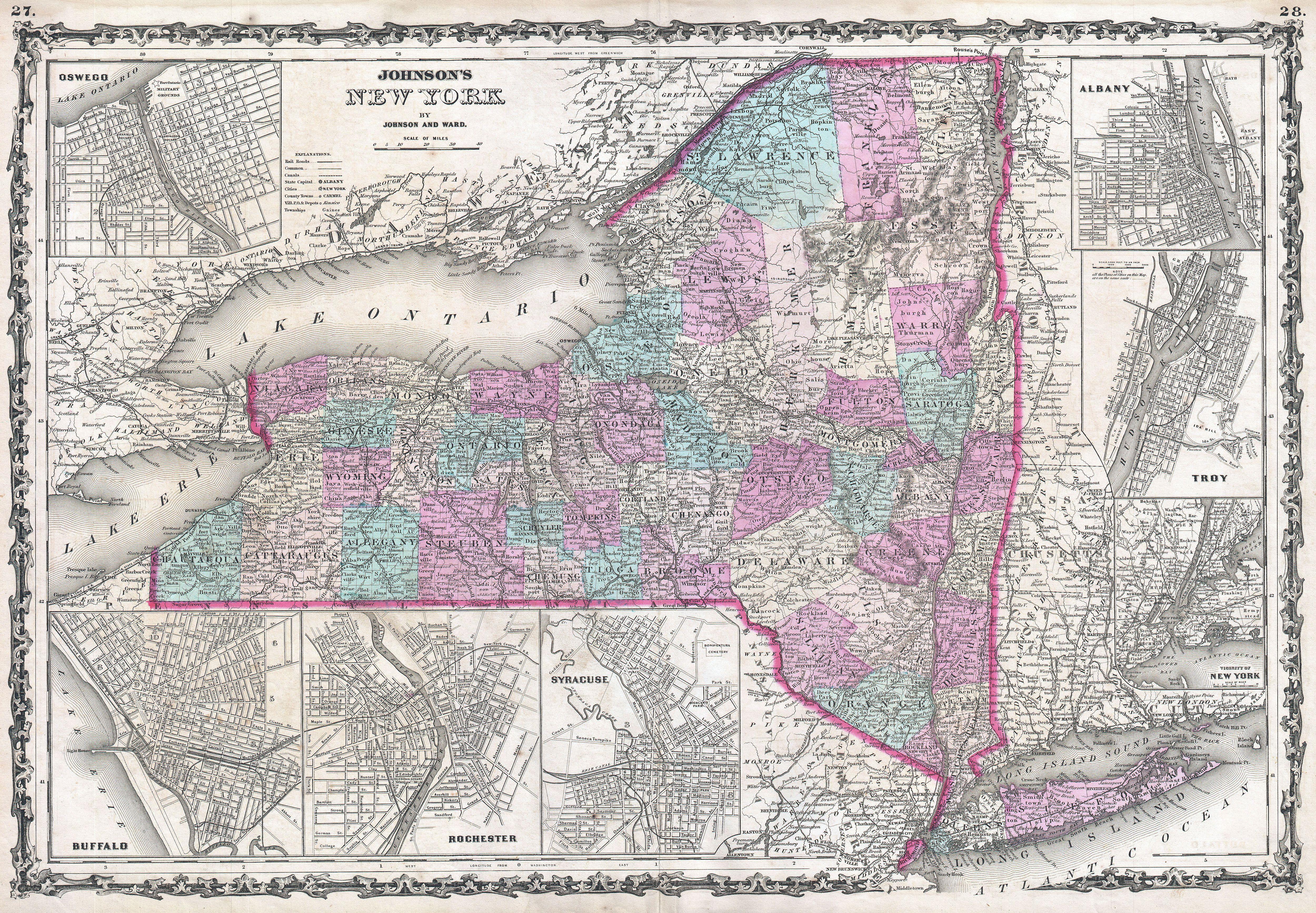
I've updated "Super David" above in bold with things that have moved further along the proof line. What does this map from Wikipedia have to do with anything? It represents something that I hadn't previously considered - that it was easier than expected to get between New York and Michigan at the time because of the railroad. Am I farther along in providing David's full line? No, but I have significant progress and I've also impacted several other folks in this same area (Elizabeth Graves Ingerson's family, in particular).

As most of you are probably saying, this is a charming aside, but what does it have to do with anything? I use this as an episode in how working with others, even those who don't know the ESM standard for evidence and have scrapbooks of census info and other documents and have trees on Ancestry can be helpful in pointing out how to critically evaluate evidence. 

And that's what is missing from this treatment of new genealogists in the field. We are not using our opportunity to teach people critical thinking and evidence evaluation. We are in short, cutting off our own nose to spite our face. What's so frustrating is that social media offers so many opportunities to do better. In short:
1. We can go into depth and share our information with more people than ever before, thanks to blogs, online sources like Ancestry.com, Fold3, FindmyPast.co.uk, and many digital sources at our local libraries, like Early American Newspapers, 19th Century British Newspapers, and Heritage Quest, to name a few!
2. We can EXPLAIN in great detail the how, the when, and the why behind our decisions in making our trees. We are not limited by the length of the words that can fit on the page.
3. We can use many platforms to enhance the knowledge of folks who live even in the farthest reaches of the world.

If every genealogy blogger out there took the time to write one blog about a particular situation they faced and how they solved it, the world's knowledge base of genealogy would be greatly advanced, and for the folks that are choosing to learn about genealogy, represent a base of knowledge that could help them pick up their own critical thinking skills and be able to make the decision whether or not to add that 53,002nd person, or to walk away and work on a person in there existing tree.

In short, instead of throwing up our hands, calling them collectors and railing against what is immovable, we could give an effort to making things change, and then working on our own ability to manage what's out there. All we can control is what we do, not what THEY do.

As a result, my approach to these people has changed. Instead of sending angry rants to my genealogy buds about this, I'm trying really hard to make my approach to try and explain to people what is not correct, and then working on my own response to the issue. It is their onus whether or not they will take me up on learning why what they have is not correct. I can continue to use their research as a way to point me in a direction, but I will continue to critically evaluate every point in an ancestor's life, no matter what the source.

Part 2: The Pitfall of Vilification of New Genealogists


So in part 1 I talked about the frustration of the vilification of all new genealogists, asking folks to throw away years of work or take their work offline or follow a so-called "expert's" standard from an online forum.

I can see where that might be mystifying to many genealogists, who really don't use social media for genealogy. But I will keep going with the negative issues associated with this vilification for the moment (rest assured, tomorrow's post will conclude with some positive ways to focus) for the moment. Please bear with me.

So what's the problem with hating on the new people? #1. It teaches you to be sloppy.

Recently, I decided to write up a series of blog posts  on a couple that I've been working on for 3 years with little luck and little family interest in trying to see what happened to them, David Ingerson and Elizabeth Ann Graves.

Those blogs are still in draft mode. Why? Because I realized that I was following in this trap. I recently discovered a very small piece of information about David Ingerson online. Curious, I click on the Mundia link  given by Google and see:


See that last part? Let me zoom in for you.


Yes, that says 53,692 people in this person's tree. ::facepalm::

Now, I was about to do as most of the other online forum members would do - roll my eyes, dismiss this person's research, and assume that it was bad. What could I do? It was so frustrating! Yet I found the brain power to follow the advice in my opening pic. "Check myself before I wreck myself!" 

Here's the thing. Yes, this person's research was TERRIBLE. But it made me stop and think to evaluate MY research. So I compiled what I have affectionately dubbed "Super David" with ALL of my research put together:

“Super David” Ingerson 
Child of Jonathan Ingerson and Abigail Scofield ?
Birth 29 Apr 1801 Saratoga, Saratoga, New York, United States ?
Marriage to Almira Drake 1821 Evans Mills, Jefferson Co, New York, United States 
Kid 1 Eneas Ingerson, b. 1832 NY 
Census 1850 Gouverneur, Saint Lawrence, New York, United States 
Marriage to Elizabeth Graves 1852 
Mary J Ingerson, b. 1851 NY 
Jay Eugene Ingerson, b. 1857 NY 
Census 1860 Macomb, St Lawrence, New York, United States 
Military 1864 Private, 92nd New York Infantry 
Census 1870 Forester, Sanilac, Michigan, United States 
Death 13 May 1872 Sanilac, Sanilac, Michigan, United States ?
Census 1880 Gouverneur, Saint Lawrence, New York, United States 
Death 23 April 1886 Gouverneur, St Lawrence, New York

This compilation of facts that have been put together across multiple years of research shows the mess that Super David is in. 2 deaths, a semi-proven parentage (? standing for questionable data in this case, blogs really aren't the best place for me to pull all the sources together without writing up a full case study). 

So I dug into each fact individually, taking each piece of evidence on its face. 

And I would have probably thrown the computer out the window if I could have. Instead, I substituted my rage for knitting, and calmed right back down.

Tomorrow: the conclusion of the story, and why the world is not doomed because of all these new genealogists

Thursday, March 6, 2014

Part 1: Vilifying the Work of New Genealogists

Warning: the following contains genealogy opinion and is the start of a new series for the week. This chilling image of the Fascists is from the Wolfsonian-FIU Library in Miami Beach, Florida. It's really interesting how propagandists used images like this to de-humanize the view of the enemy.

I am strongly getting that impression when it comes to the current state of genealogy. Folks are lining up to vilify the newest genealogists coming into the field (and no, you should not get an image of old people knocking young people here, it is across all ages!) and those folks who are working from sites like Ancestry.com as being stupid, illiterate, degenerate, "doing it wrong", "not real genealogists", "not real family historians", "name collectors", and too unintelligent to follow the "rules". And that these folks view anyone who even breathes the word "source" or "formatting" as "elitists".

It's disheartening to see so many folks dismissed from such an interesting hobby that can help you with so many life skills. And like the old argument that "German = Fascist" which caused so many Germans to be shunned in WWII, "Muslim = Terrorist" which causes so many folks from across the spectrum to be wrongly ostracized or accused, and "American = fat, lazy, stupid" which has caused all smart Americans to masquerade as Canadians abroad, we need to stop playing with a stereotype. And what's worse? The folks who are leading the charge are the genealogy elite - Michael J. LeClerc, for example. I won't call all of them out, because I think its pointless. I doubt they're going to listen and will just continue driving the wedge between the generations until no one dares whisper the word genealogist for fear of being called a snobby, elitist, obsessive.

What does it do to a new genealogist or family historian's self worth when experienced genealogists say they have to delete everything and start over because they made so many mistakes? Or when we say their work is worthless, their platform is awful, and that they've stolen all their work?

We end up with a lot of new folks who are frustrated, think that we're a bunch of elitists and aren't willing to give genealogy another shot and leave the hobby, because they've done their work and there's no reason to continue. When in actuality, there are SO many reasons to continue.

What is happening in the field is that I see more and more folks chillingly cut out of the very conversations that would benefit them, because of intensity of derogatory language, and the "demands" of a few people who deem that they know better than all. And I'm not talking about the educated experts like Elizabeth Shown Mills, Geoffrey Rasmussen, James Tanner, Marien Pierre-Louis, Michael Hait, Judy Russell, Thomas MacEntee, Elise Powell, or Maureen Taylor (for example). I'm talking about online forum posters and group members for the most part.

I am actively involved in genealogy on Facebook, Twitter, Ravelry, and several other informal forum groups. In recent weeks (mostly spurred on by LeClerc's article) there have been posts where people are denigrated for wanting to find further education and not knowing where to go, for having their tree published online at all, and in many answers, urged to "throw away all that crap so that you can start over" (in this case an answer to someone who had inherited their parents' 30+ years of research! And others who were made out to be villains for even thinking about putting their tree online at all, because that's just "giving it away" and "everyone will steal it" and still others told that they should just stop doing genealogy unless they were willing to following X standard.

Tomorrow: let's play what's wrong with this picture. 

Saturday, February 2, 2008

Evening and Weekend Hour Restoration at NARA

Hurray!

- - - - - -

NARA Requests Comments About Restoring Research Room Hours
The following was written by the U.S. Naional Records and Archives Administration:

For public comment - NARA rule restoring DC area archival research room hours

The National Archives and Records Administration published an interim
final rule in the Federal Register on February 1, 2008, to restore the
weekly evening and Saturday hours that the archival research rooms at
the National Archives Building in Washington, DC, and the National
Archives at College Park, MD are open.

Comments on this rule will be accepted through March 17.

To review the rule and make comments, please go to www.regulations.gov
and type "NARA" in the Search box. The rule is titled Locations and
Hours; Changes in NARA Research Room Hours. Additional information on
the rule is provided below.

The FY 2008 NARA Budget in the Consolidation Appropriations Act of 2007
signed by President Bush on December 26, 2007, includes $1.3 million to
restore evening and Saturday hours in the research rooms in the National
Archives Building and the National Archives at College Park (Archives
II). Prior to October 1, 2006, these research rooms were open three
evenings per week (Tuesday, Thursday, and Friday) and every Saturday.
Under this interim final rule, the research rooms will be open from 9
a.m. to 5 p.m. on Monday, Tuesday, and Saturday. On Wednesday, Thursday,
and Friday they will be open from 9 a.m. to 9 p.m. We decided to make
this adjustment to the previous schedule so that out of town researchers
will have consecutive evenings along with Saturday to work. This
schedule will also make staffing the rooms easier for managers. We set
the effective date of the new hours as April 14, 2008 to allow time to
hire and train the additional research room staff and to adjust the
terms of the security guard contract.

Sunday, January 20, 2008

Sketching, and searching!


I found it...here's one of the reject patterns, since I know my partner might see it.

I love it when you go through book after book after book, only to find that the real pattern that you are looking for will just "pop" out at you as this sudden realization like you've been searching for it your entire life! I love that feeling!

So now its off to yarn choice. I got one at the store today, but the gauge is wrong. Have to try again tomorrow at IDEA Studio or at the HL. I'm thinking I have the right color for one but not the other. And its a bugger to find - I've been searching all over the Interwebs to find it. I may have to ask my dear friend to work some muggle magic over the local YS owners to track something down in the right color.